


Зачем нужен аккаунт на Viva-Games?
Пользователи, у которых есть аккаунт, могут сохранять игровой процесс на сервер в любой игре и создавать списки игр (как на Youtube, например).
Создание аккаунта абсолютно бесплатно и займёт всего минуту Вашего времени.
Для создания аккаунта просто кликните в блоке "Войти на сайт" иконку социальной сети, в которой у вас уже есть активный профиль и следуйте подсказкам.
Мы в соцсетях


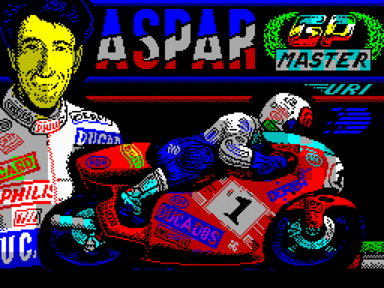
(DinamicSoftware).gif-384x288.png "Aspar GP Master")
(DinamicSoftware).gif-88x66.png "Нажмите для увеличения")


Aspar GP Master
https://viva-games.ru/game/aspar-gp-masterDinamic Software (Испания), 1988
Авторы: Pedro Sudon, Jose Juan Garcia Quesada, Orlando Araujo, Paco Martin, Javier Cubedo, Roberto Uriel Herrera
Жанр: Гонки
Язык
- Русский
- English
Управление
- Кемпстон джойстик(?)
- Клавиатура(?)
Максимум игроков
- Один
Рассказать друзьям
Доступные версии
Доступные версии
- Аннотация
- Описание (пер.)
- Информация
- Аннотация
- Описание (пер.)
- Описание
Амбициозный симулятор мотогонок, посвященный легендарному испанскому чемпиону Хорхе Мартинесу «Аспару». Игра воссоздает сезон чемпионата мира 1988 года в классе 80cc: семь реальных трасс (Херес, Ассен, Брно, Имола и др.), официальные тренировки для определения стартовой решетки, систему начисления очков и сохранение прогресса паролями.
Главная особенность — попытка симулировать уникальный стиль езды Аспара: ранний выход из поворотов, перенос веса, контроль заноса коленом. Управление требует тактики: нужно следить за временем круга, позицией, риском аварий и запасом мотоциклов.
Технически игра использует вид сверху и сборку трасс из 23 графических блоков (как конструктор Scalextric), что позволяет хранить все семь трасс в памяти без перезагрузок. ИИ соперников оказался настолько продвинутым, что мотоциклы самостоятельно обгоняли друг друга, удивляя разработчиков.
Вердикт: искренний и технически смелый проект, передающий драматизм гонок и характер великого чемпиона. Одна из жемчужин испанской школы разработки конца 80-х.
Аспар мастер
Инструкции
Хорхе Мартинес “Аспар” – это уже миф. Он пересек ворота Олимпа, не спросив ни у кого разрешения. На скорости 220 км/ч. Хорхе – один из тех искренних, профессиональных и амбициозных людей, которые делают то, что им нравится, и действительно получают от этого удовольствие. Он садится на мотоцикл, и никто не может его остановить, более того, он смог установить свой собственный стиль, потому что, как он сам говорит: “Мне нравится, когда мне говорят, что я победил в стиле “Аспар””.
История чемпиона
Он родился 26 лет назад в Альсире (Валенсия), его любовь к мотоциклам началась еще в юности. Хотя его отцу это не нравилось, он умел принимать решения:
Он уже начал демонстрировать свой чемпионский менталитет и железную волю.
Таким образом, с помощью бывшего гонщика Ф-1 Адриана Кампоса и Рикардо Тормо он начал участвовать в соревнованиях в Испании, давая понять, что он – готовящийся суперчемпион. Он участвовал в гонках в возрасте 17 лет на 75-кубовом мотоцикле Bultaco. Он занял второе место в кубке Streaker Cup, уступив “некому” Сито Понсу… после этого он выиграл шесть чемпионатов Испании, два в классе 50сс и четыре в классе 80сс.
В 1984 году в Ассене (Голландия) он выиграл свой первый Гран-при в классе 80 куб. см. Это был, как он иногда говорил, самый счастливый день в его жизни. С этого дня его карьера стала безостановочной.
“Аспар” – испанский гонщик с наибольшим количеством побед: три мировых титула в классе 80сс и один в классе 125сс. В этом году он сделал “дубль”: 80 куб. см и 125 куб. см, на Дербисе, с которым он одержал почти все свои победы, не менее 27 Гран-при!
Хотя ему уже 26 лет, Хорхе Мартинес, это его настоящее имя, все еще носит прозвище, которым его называли соседи в Альсире (Валенсия), когда он был ребенком: “Аспар” происходит от “аспаренья”, разновидности туфельки, таким маленьким и ловким был Хорхе.
Их цели? Кто знает. Впрочем, от такого амбициозного человека, как “Аспар”, можно ожидать чего угодно. Если через несколько лет мы увидим его с короной в классе 500 куб. см, не стоит удивляться.
Интересно, в чем секрет того, как стать лучшим? Возможно, дело в его вышеупомянутой воле и чемпионском менталитете, хотя, несомненно, свою роль сыграл и его стиль езды, который настолько же оригинален, насколько и эффективен. Хорхе был первым 80-кубовым гонщиком, который коснулся земли коленом, что дает ему больше уверенности в случае заноса мотоцикла. Однако самая важная его черта – это смелость. Он сказал, что не боится, что не думает о смерти, что когда он почувствует страх, то откажется от соревнований. Любопытно, что Сантьяго Рабасса, директор команды Derbi, однажды отчитал его за побитие рекорда трассы, опасаясь возможного падения.
Это Хорхе Мартинес “Аспар”. Чемпион. Человек, который ничего не боится, даже смерти.
Как управлять автомобилем
С тех пор как он стал профессиональным гонщиком, “Аспар” всегда участвовал в гонках на мотоциклах малого объема: 50cc, 80cc и 125cc. В любом случае, его стиль езды сильно отличается от традиционного для этих мотоциклов. Обычно он сидит как можно дальше назад и как можно ниже, приспосабливаясь к мотоциклу и не соскальзывая с земли.
Хорхе был первым из 80-кубовых гонщиков, который немного сдвинул заднюю часть, чтобы выйти из поворотов, и потер коленом землю: вы можете лучше чувствовать “где” асфальт, и вы всегда можете опираться коленом на землю, чтобы избежать падения, если шины проскальзывают… Он также сидит выше и больше подается вперед, перенося вес на руль, чтобы обеспечить большее сцепление с передним колесом. В целом его стиль езды немного ближе к стилю езды 250- и 500-кубовых мотоциклистов. Благодаря всему этому “Аспар” может раньше нажать на газ на выходе из поворота и ускориться на выходе из поворота, когда его соперники все еще находятся в полном напряжении.
Однако на 80 и 125 нельзя ездить как на мощном 500-м, где самое главное – рано ускоряться на каждом повороте. Здесь нужно очень хорошо тормозить и сильно отклоняться назад. На самом деле, 80-ки и 125-ки обычно проходят повороты быстрее, чем большие мотоциклы! На маленьком велосипеде трудно ехать очень быстро, но если тебя зовут “Аспар”, то это проще.
Клаудио Боет Исполнительный директор журнала “Motociclismo”.
Инструкции
Аспар г.п. магистры
С Аспар G.P. MASTER вы сможете подражать подвигам величайшего гонщика, выступающего в настоящее время на мировой мотосцене.
Эта видеоигра не только в точности воспроизводит структуру чемпионата мира 1988 года в классе 80сс (трассы, гонщики, официальные тренировки…), но и позволяет в совершенстве имитировать стиль езды Хорхе Мартинеса Аспара.
Чемпионат мира по скорости
Он состоит из семи Гран-при, которые засчитываются в зачет чемпионата мира.
За него борются лучшие гонщики и команды.
Последовательность во всех гонках – очень важный фактор. Вы должны набрать как можно больше очков, но иногда лучше не рисковать.
Как набрать очки в p.g.
В семи гонках Гран-при можно принять участие, и в каждую из них квалифицируются восемь гонщиков.
Порядок подсчета очков следующий:
1-й – 20 баллов
2-й – 17 очков
3-й – 15 очков
4-й – 13 очков
5-й – 11 очков
6-й – 10 баллов
7-й – 9 очков
8-й – 8 очков
Очки, набранные вами в каждой гонке, суммируются и определяют ваше положение в чемпионате мира в любой момент времени.
Ключ регистрации новой карьеры
В конце каждой гонки вам будет присвоен код входа или пароль для новой гонки, который позволит вам, если вы захотите отключить компьютер, возобновить соревнование с того места, на котором вы остановились (классификация, очки, аварии и т.д.) без необходимости начинать чемпионат заново. Вам придется записывать его в каждой гонке и вводить, когда вы выберете “продолжить гонку” в главном меню.
Главное меню
START CHAMPIONSHIP: Эта опция запускает чемпионат мира.
CONTINUE SHARING: Позволяет продолжить чемпионат с того места, на котором вы остановились, после выключения компьютера и повторной загрузки программы.
KEYBOARD: Возможность переопределения клавиш.
JOYSTICK: После выбора этой опции, если вы хотите играть с клавиатурой, вам придется вернуться в главное меню и выбрать “клавиатура”.
Второстепенное меню
ПРАКТИКА: Вы можете проехать столько кругов по трассе, сколько захотите, независимо от аварий, в которых вы можете оказаться, или времени, которое вы установили.
ОФИЦИАЛЬНЫЕ ПРОВЕРКИ: Как вы знаете, официальные тренировки проводятся перед гонкой и именно они определяют конфигурацию стартовой решетки каждого Гран-при. Вы должны будете установить время, которое позволит вам претендовать на одно из восьми возможных мест на стартовой решетке, и если вы получите лучшее время, то сможете выбрать поул-позицию слева или справа от первого ряда стартовой решетки. В верхней части вашего табло будет показано лучшее время, установленное другими гонщиками, а также время, которое вы устанавливаете на каждом круге. Вам также будет показано, если вы уже показали одно из восьми лучших времен, и ваше место на стартовой решетке. Логично, что вам придется бороться до тех пор, пока вы не получите лучшее время, с ограничением по времени в 15 минут. В любой момент вы можете покинуть сеанс тренировки, нажав на специально предназначенную для этого кнопку. Вы займете то место в сетке, которого достигли до сих пор. Если вы выбываете до начала квалификации с одним из восьми лучших времен, вы не сможете принять участие в гонке, хотя у вас будет возможность посмотреть гонку других квалифицировавшихся гонщиков.
WORLD RANKING: Позволяет увидеть предварительную таблицу мирового рейтинга на момент нажатия на опцию.
ПРОСМОТР ТРАССЫ: Перед каждой гонкой вы сможете увидеть схему текущей трассы в масштабе и узнать ее основные характеристики: длину, рекорд самого быстрого круга, гонщика, который его достиг, и среднюю скорость. Нажав на кнопку, вы появляетесь на стартовой решетке без мотоциклов на трассе, и вы можете перемещаться по трассе по своему усмотрению с помощью кнопок, которые вы выбрали для управления своим мотоциклом. Это позволит вам лучше рассмотреть трассу.
ДЕМО: Событие, не связанное с чемпионатом мира. Убедитесь в этом сами.
MAIN MENU: возврат в главное меню.
Несчастные случаи
В случае аварии вы можете подняться и продолжить гонку, потеряв несколько секунд. Если ваш мотоцикл загорится на тренировке, вы сможете принять участие в гонке, только если вы уже заняли место на решетке на предыдущем круге. Если это произойдет с вами во время гонки, вы не сможете продолжить гонку и не получите очков в зачет чемпионата. В обоих случаях вы потеряете один из 5 велосипедов, имеющихся в вашем распоряжении для завершения всего соревнования.
Табло
В верхней части экрана для печати текста будут показаны различные сообщения из таблицы судей гонки, такие как рекорд самого быстрого круга, последний круг, дисквалификация, недействительный старт и т.д..
С правой стороны находятся индикаторы, управляемые из ям техниками вашей команды, которые дают вам всю необходимую информацию, чтобы гонка прошла гладко.
Сверху вниз они указывают:
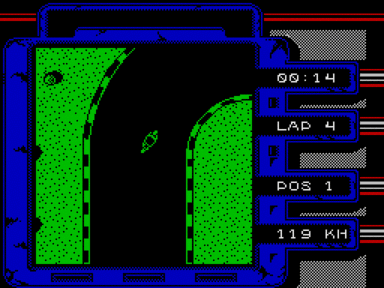
01:20 – Время, за которое вы делаете каждый круг. Он инициализируется, когда вы проходите финишную черту. Вы заметите, что это время не совсем соответствует реальному времени, так как оно было масштабировано в зависимости от длины каждой трассы и скорости.
LAP 4 – Количество кругов до конца гонки.
POS 5 – позиция, которую вы занимаете на каждом круге, обновляется, когда вы проходите финишную черту.
212 KH – спидометр.
Ключи к вождению
У вас есть четыре клавиши для управления рулевым управлением и ускорением вашего мотоцикла и пятая клавиша для управления функциями сцепления-тормоза.
Первые четыре (влево, вправо, вверх и вниз) работают как дроссельная заслонка, если они совпадают с направлением движения мотоцикла, в противном случае они поворачивают мотоцикл в том направлении, которое было нажато, а если нажато противоположное направление, то мотоцикл будет замедляться, так как два направления или ускорения противодействуют друг другу.
Таким образом, чтобы начать движение к выходу, нужно нажать на сцепление-тормоз и одновременно на акселератор (кнопка направления вверху) и в тот момент, когда загорится зеленый свет светофора, отпустить сцепление-тормоз. Это объясняет функцию этой 5-й кнопки, которая позволит вам тормозить, сохраняя обороты двигателя в поворотах, и не терять мощность на выходе из виража после отпускания сцепления-тормоза.
Вам придется найти наилучшую комбинацию из пяти, чтобы поддерживать двигатель в рабочем состоянии. Самая высокая скорость и лучшая линия.
Инструкции по погрузке
Спектральный диск
Подключите SPECTRUM + 3.
2. Вставьте диск.
3. Выберите опцию зарядного устройства.
4. Нажмите ENTER.
5. Нажмите на номер программы, которую вы хотите загрузить.
6. Программа загрузится автоматически.
Дискотека Amstrad
1. Подключите AMSTRAD
2. Вставьте диск.
3. Введите CPM и нажмите ENTER.
4. Нажмите номер программы, которую вы хотите загрузить.
5. Программа загрузится автоматически.
диск Msx
1. Подключите MSX.
2. Вставьте диск.
3. Нажмите кнопку RESET.
4. Нажмите и удерживайте клавишу управления, пока не появится меню.
5. Нажмите номер программы, которую вы хотите загрузить,
6. Программа загрузится автоматически.
Pc
1. Вставьте диск в дисковод A.
2. Подключите компьютер.
3. Программа загрузится автоматически.
Спектр 48K +
1. Подключите выход EAR устройства SPECTRUM к выходу EAR кассеты.
2. Перемотайте кассету на начало.
3. Установите громкость на 3/4 от максимальной.
4. Введите LOAD и нажмите ENTER.
5. Нажмите PLAY на кассете.
6. Программа загрузится автоматически.
7. Если нет, повторите операцию с другим объемом.
Спектр +2, +3
1. С помощью курсора выберите опцию 48 BASIC и нажмите ENTER.
Затем следуйте инструкциям на SPECTRUM 48K + (обратите внимание, что громкость уже установлена на + 2).
Amstrad cpc 464
1. Перемотайте кассету на начало.
2. Нажмите одновременно кнопки CONTROL и ENTER и нажмите PLAY на кассете.
3. Программа загрузится автоматически.
Amstrad cpc 664-6128
1. Введите | TAPE и нажмите RETURN. (Ввод | осуществляется одновременным нажатием SHIFT (MAYS) и @).
2. Затем следуйте инструкциям CPC 464.
Msx-msx 2
1. Подключите кабель кассеты в соответствии с инструкцией.
2. Перемотайте кассету на начало.
3. Введите LOAD “CAS:”, R и нажмите ENTER.
4. Нажмите PLAY на кассете.
5. Программа загрузится автоматически.
Команда дизайнеров
Графика, дизайн и построение схем – Хавьер Кубедо
общий анализ, программирование координационной группы, интеллектуальные процедуры вождения – Педро Судон
управление чемпионатом в целом (очки, время, столкновения, меню] – Хосе Хуан Гарсия
поддержка картографии и графического дизайна – Орландо Араужо
подпрограммы поддержки системы, прокрутка и управление спрайтами – Пако Мартин
сотрудничество в области спектральной графики – Роберто Уриэль Эррера
экран презентации – дебора
иллюстрация на обложке – Фернандо Сан Грегорио
Продюсер – Хавьер Кубедо
DINAMIC благодарит Хорхе Мартинеса “ASPAR” за неоценимое сотрудничество, а также журнал MOTOCICLISMO за помощь в подготовке некоторых технических аспектов игры.
Мы также благодарим всех, кто прямо или косвенно способствовал реализации этого амбициозного проекта.
Г.п. испании
24 апреля 1988 года
Харама (3.312 м.)
Рекордный круг
80 сс. Хорхе Мартинес (’87) 1 ’37’52 (122 256 км/ч.)
Г.п. из Чехословакии
28 августа 1988 года
Брно (5.394 м.)
Рекордный круг
80 куб. см. Штефан Дорфлингер (’87) 2’24″02 (134,831 км/ч.)
Г.п. Югославии
17 июля 1988 года
Риека (4 168 м.)
Рекордный круг
80 сс. Хорхе Мартинес (’86) 1’40″16 (149,808 км/ч)
Г.п. из Италии
22 мая 1988 года
Имола (5.040 м.)
Рекордный круг
80 куб. см. (Нет данных. Новый макет)
германия г.п.
29 мая 1988 года
Нюрбургринг (4 542 м.)
Рекордный круг
80 cc. Ян МакКонначи (’86) 1’57″01 (139.741 км/ч.)
Г.п. португалии
1 мая 1988 года
Херес (4.218 м.)
Рекордный круг
80 сс. Хорхе Мартинес (’87) 2’02″50 (123 958 км/ч.)
Генеральный секретарь Нидерландов
25 июня 1988 года
Ассен (6.134 м.)
Рекордный круг
80 cc. Ян МакКонначи (’86) 2’30″79 (146.430 км/ч.)
Введите свои коды участия здесь
Код участия в следующей гонке, в которой вы участвовали в последний раз
Введенный вами пароль даст вам доступ к следующим г.п.
Когда вы завершите свое участие в G.P., вам будет присвоен код, который даст вам доступ к следующему забегу. Это будет полезно, только если вы выберете опцию “продолжить гонку” в главном меню.
Сверху вниз и слева направо:
Орландо Араужо
Питер Судон
Хосе Хуан Гарсия
Хавьер Кубедо
Как был создан аспар г.п. мастер
“Несомненно, один из самых амбициозных проектов Dinamic; наконец-то он достиг своей цели. В сопровождении множества проблем, которые пришлось решать на протяжении всего соревнования, в рекордно короткие сроки.
В очередной раз команда Dinamic дожала педаль до металла, чтобы добиться этой поул-позиции”.
Хавьер Кубедо
Художественный продюсер
Шесть Г.П. (больших проблем)
Было много проблем, с которыми нам пришлось столкнуться с момента начала работы в мае 88-го года, но только одно нам было ясно, даже самая маленькая деталь игры должна принести инновации в том, что касается этого типа спортивных симуляторов. Для начала у нас было только одно название: “Аспар”, и одна идея: “Чемпионат мира по скорости”; с этого все и началось.
Прежде всего, мы решили придать ей иной ракурс, отличный от всех существующих игр с похожими характеристиками. Наконец, мы выбрали вид сверху (вид сверху). Это была наша первая большая проблема – разработать систему построения схем, которая позволила бы нам воспроизвести любую из них более или менее удобным способом. Кроме того, семь трасс, входящих в чемпионат мира по скоростному вождению 1988 года в классе 80 куб. см, могут находиться в памяти, что позволяет избежать многократной загрузки.
Создание схем
Система создания схем была сложной в своем создании, но облегчила, с помощью картографа, разработку семи схем, хотя каждая из них должна была быть предварительно разработана на бумаге.
С общим количеством графики 12K., разделенной на блоки 2×2 символов, формируются более крупные части, представляющие различные части макета: кривые, прямые линии и т.д., разного размера, с системой крепления, которая позволяет соединять части вместе, как если бы это был “Scalextric”.
Он действует в восьми направлениях, а восьмая часть окружности – это наименьшая часть кривой, которую мы можем представить, и которая вместе с другой восьмой частью образует квадрант этой окружности. Таким образом, он состоит из 8 кривых и 6 прямых участков (содержащих оба бордюра пути), которые, с еще 4 меньшими и другими перевернутыми, составляют в общей сложности 23 части макета. Можно соединить восьмую часть кривой с другой кривой того же квадранта, образуя кривую с поворотом на 90 градусов; любую восьмую часть кривой с прямой линией, образуя поворот на 135 градусов, можно соединить симметричные кривые разных квадрантов и даже соединить восьмую часть кривой с ее перевернутой симметричной кривой.
К этому добавляются в общей сложности 5 частей для создания прямой трибуны, стартовой решетки и финишной линии. Другая группа блоков предназначена для украшения (так сказать) трасс, будь то рекламные щиты, публика, трибуны, растительность и т.д., которые были размещены после составления схемы расположения каждой трассы.
Хавьер Кубедо
Процедура отображения
Если бы три месяца назад гадалка сказала мне, что однажды я буду биться насмерть с друзьями из-за спора о сборке “Scalextric”, я бы неделю смеялся. Так и случилось. Когда работа над программой уже шла полным ходом, кому-то пришла в голову блестящая идея сказать мне, что установка трека Scalextric – это детская забава. Мой друг и все те, кто был с ним согласен, закончили выходные в отделении интенсивной терапии.
Этот комментарий может показаться неуместным и не к месту, поскольку многие зададутся вопросом, какое отношение имеет езда на “Scalextric” к картографии трасс. Даже если это простое оправдание того, что я отправил своих коллег в больницу, я постараюсь это объяснить.
Каждая из семи трасс, составляющих игру, должна быть построена из 23 деталей разного размера (повороты, прямые, специальные развязки и т.д.). Эти части, в свою очередь, состояли из графических блоков размером 4×16 байт в версии AMSTRAD. Обычная процедура отображения брала коды частей из таблицы и расширяла ее, заливая результаты (графические коды) в карту блоков. Наиболее нормальным способом было бы выделение трех байт для каждого фрагмента в таблице дорожек, поскольку два байта необходимы для каждого фрагмента в таблице дорожек, поскольку два байта необходимы для определения позиции в карте блоков, не говоря уже о том, что еще один байт необходим для фрагментов с повторениями. Однако в такой игре, как ASPAR, целью которой является одновременное хранение в памяти данных от семи различных схем, это не лучшее решение. Задача состояла в том, чтобы выделить только один байт на деталь, указав только координаты выходной детали. Затем следует код детали, которая соединяется с предыдущей, и так далее до завершения схемы.
Интуитивно идея очень похожа на практическую сборку Scalextric, когда мы последовательно размещаем одну за другой все составляющие его детали, положение которых всегда определяется положением первой детали. Перевод этой очень простой идеи на язык ассемблера обошелся мне ровно в 14 чашек кофе, 2 пачки сигарет и воскресенье без прогулок. Как вы понимаете, я не собираюсь объяснять здесь, как я это сделал, и скажу лишь, что главное – назначить каждой детали две разные точки крепления, которые будут определять относительные координаты для следующей детали в зависимости от текущего направления движения.
Это было проще всего, но в процессе разработки игры пришлось внести бесчисленные дополнения, среди которых был алгоритм направленности графических кодов дорожного интерьера, который позволил бы мотоциклам плавно следовать своим курсом, не сходя с дороги.
После того, как процедура отображения работала идеально, следующим шагом было кодирование 7 схем, которые Хавьер разработал на основе реальных схем. Поэтому в то же время необходимо было создать мощный редактор схем, позволяющий легко построить любой тип трассы в мгновение ока, всего несколькими нажатиями клавиш, следуя инструкциям в меню.
Орландо Араужо
Ведение учета
У нас есть макеты трасс и мотоциклы, готовые к началу гонки. Проходит первый тест, и все мотоциклы выезжают на прямую… они вылетают на первом повороте и врезаются в край трека.
Гораздо сложнее, чем программировать движение Аспара, нашего главного героя, управлять движением других велосипедов, или как определить близость поворота и как его выполнить.
Решение больше не могло быть найдено в воскресных утренних просмотрах гонок, мы придумали несколько решений:
Ряд ключевых точек, куда съезжаются все мотоциклы и, добравшись до этой точки, переходят к следующей. Этот вариант пришлось отклонить, так как, с одной стороны, было слишком много ключевых точек, а с другой стороны, все велосипеды будут проходить через одно и то же место.
Вторым возможным решением было следовать блочной карте типа Scalextric, но она была закодирована, и для того, чтобы следовать ей, ее пришлось бы расширить, на что не хватало памяти.
Расширенная карта состояла из маленьких блоков (два на два символа), и окончательное решение пришло оттуда. Блоки типа Scalextric в свою очередь состоят из других более мелких блоков, из которых гладкие обозначают центр трека. Мотоциклы, следовательно, будут стремиться к гладким блокам. Если перед мотоциклом не было путевого блока, он должен был повернуть направо или налево в том направлении, в котором он был. Теперь возникла проблема, связанная с тем, что право было иногда вверху, иногда внизу, а иногда даже слева, так что не раз мотоциклы могли развернуться и поехать в противоположном направлении. Блокам необходимо было придать направленность. Трассы пришлось перерисовать, разделив символы в центре трассы на восемь одинаковых символов, но с разными кодами, чтобы мотоцикл не только знал, что он едет по центру трассы, но и в каком направлении ему следует двигаться.
На этом проблемы не закончились. Мотоциклы сбивались на очень крутых поворотах из-за превышения скорости, что потребовало разработки сложной процедуры снижения и ускорения скорости, а также алгоритма возвращения на дорогу в случае, если они все же сбились.
Питер Судон
Обгон
Проблема обгона была оставлена для решения после проблемы с ездой. Я не думал об этом, но я предполагаю, что мотоциклы займут позиции в первом повороте и останутся в таком порядке до конца гонки.
Я был очень удивлен, когда переключил программу обратно в демо-режим, и мотоциклы обгоняли друг друга, как будто это была настоящая гонка. Вся команда прибежала посмотреть на захватывающую гонку, в которой Аспар стартовал с четвертого места и был обогнан во втором повороте, финишировав пятым. С этого момента он стал занимать позиции, так что в конце второго круга он был вторым, а на третьем круге занял первую позицию.
Это было потрясающе, все смотрели гонку на компьютере, более захватывающую, чем те, что показывают по телевизору, и спрашивали меня, как я это сделал, каков алгоритм обгона и как я специально запрограммировал Aspar на победу в гонке.
Я, с широко открытыми глазами, не мог поверить в то, что вижу. Я часто говорил, что программировать видеоигры – это как быть Богом: ты создаешь их, а они двигаются сами по себе и удивляют тебя, но я никогда не был так удивлен, как сейчас.
Я не программировал обгоны, а Aspar был просто одним из мотоциклов, который управлялся по той же схеме, что и все остальные.
Мне пришлось еще два или три раза посмотреть демонстрационный ролик, чтобы убедиться, что мотоциклы действительно обгоняют и что Aspar, даже если он не выигрывает, всегда заканчивает гонку в лидерах.
Как это объяснить? Алгоритм, который заставлял мотоциклы тормозить на поворотах или возвращаться на дорогу, если они сходили с нее, означал, что на выходе из поворота каждый мотоцикл имел свою скорость, которая позволяла им обгонять тех, кто лучше всех прошел предыдущий поворот.
В любом случае, мотоциклы по-прежнему часто съезжали с дороги, и, что более серьезно, при обгоне мотоциклы обгоняли друг друга, как будто наезжали друг на друга. Как только рутина аварий закончилась, вновь возникли проблемы выезда на трассу и обгона.
Несмотря на чудеса, финальная программа все еще была далеко впереди.
Питер Судон
Шоки
На данном этапе уже можно было наблюдать демонстрационный заезд, в котором мотоциклы обгоняли друг друга и, в случае схода с дороги, проезжали через рекламу, рекламные щиты и широкую публику.
Легко было сделать программу обнаружения аварий, с помощью которой проблема была радикально решена: к концу второго раунда погибли все восемь гонщиков, четверо из них – высоко на дереве, тридцать или сорок зрителей и несколько судей. Поэтому сложная проблема заключалась не в том, чтобы разработать процедуру для аварий, а в том, чтобы не допустить аварий.
Первая попытка заключалась в том, что каждый мотоцикл изучал, как шахматы, каждый возможный ход и его последствия. Результат был великолепным: ни один мотоцикл не разбился, обгоны были идеальными, но был и небольшой недостаток: как в шахматах, каждому мотоциклу требовалось много времени, чтобы решить, в какую сторону двигаться, и в результате получилась замедленная гонка.
Чтобы добиться эффекта реального времени, пришлось пожертвовать совершенством обгона и предотвращения столкновений, максимально упростив процедуры с помощью алгоритмов, которые мы, конечно, не будем публиковать.
Питер Судон
Переговоры
Без сомнения, самой трудоемкой и неприятной проблемой было решить, что удалить, когда мы адаптировали новые вещи.
Наша память вскоре стала слишком мала, и мы начали атаковать рекламу Marlboro, которая была самой красивой, но занимала драгоценные полкилометра. После нескольких ссор с Хавьером, который, как и все карикатуристы, всегда проигрывает во всем этом, мы сократили группу зрителей, несколько рекламных объявлений, убрали красивый блеск с табло и я не знаю, сколько еще всего. Со своей стороны, программисты оставили в стороне несколько замечательных процедур, которые мы надеемся использовать в следующем проекте.
Питер Судон
Вы выиграли чемпионат мира?
поздравляю!!!
Вы выиграли еще один замечательный приз!
Если вы пройдете все 7 трасс и закончите чемпионат на 1-м месте, на вашем мониторе появится пароль, это ваш секретный пароль. ОТМЕНИТЕ его! перед выключением компьютера.
Заполните прилагаемую форму, указав свои данные. Запишите свой пароль в поле, вырежьте его и отправьте по почте по адресу:
Программное обеспечение Dinamic
Пза. Эспанья, 18
Торре де Мадрид, 27-5
28008 МАДРИД
Вы получите свой БОЛЬШОЙ СЮРПРИЗ по почте после того, как ваш пароль будет подтвержден. *
* Акция проводится только для первых 20 человек, приславших правильный пароль.
Запустите Aspar GP Master и играйте. Это игра про гонки, которую создали Pedro Sudon, Jose Juan Garcia Quesada, Orlando Araujo, Paco Martin, Javier Cubedo и Roberto Uriel Herrera, была издана компанией Dinamic Software в 1988 году в Испании.
An ambitious motorcycle racing simulator dedicated to the legendary Spanish champion Jorge “Aspar” Martinez. The game recreates the 1988 80cc World Championship season: seven real tracks (Jerez, Assen, Brno, Imola, and others), official practice sessions to determine the starting grid, a points system, and password-based progression.
The main feature is an attempt to simulate Aspar’s unique riding style: early exits from corners, weight transfer, and controlled oversteer with the knee. Control requires tactical considerations: you need to monitor lap times, position, crash risk, and the number of bikes available.
Technically, the game uses a top-down view and a track assembly of 23 graphic blocks (similar to the Scalextric construction kit), allowing all seven tracks to be stored in memory without reboots. The opponent AI proved so advanced that the bikes overtook each other independently, surprising the developers.
Verdict: A sincere and technically daring project that conveys the drama of racing and the character of the great champion. One of the pearls of the Spanish development school of the late 80s.
Aspar gp master
Instructions
Jorge Martínez “Aspar” is already a myth. He has crossed the gates of Olympus without asking anyone’s permission. At 220 km/h. Jorge is one of those sincere, vocational and ambitious people who does what he likes and really enjoys it. He gets on a bike and there is no one who can stop him and, moreover, he has been able to set his own style because, as he himself says: “I like to be told that I have won in the “Aspar” way”.
Story of a champion
Born 26 years ago in Alcira (Valencia), his love for motorbikes began when he was very young. Although his father didn’t like it, he knew how to make a decision:
He was already beginning to demonstrate his champion mentality and iron will.
Thus, with the help of former F-1 driver Adrián Campos and Ricardo Tormo, he began to compete in Spain, making it clear that he was a super-champion in the making. He was 17 years old at the time, on a 75 cc Bultaco. He came second in the Streaker Cup behind a “certain” Sito Pons… after that he won six Spanish Championships, two in 50cc and four in 80cc.
In 1984, in Assen (Holland), he won his first 80cc Grand Prix. It was, as he has sometimes said, the happiest day of his life. From that day on his career has been unstoppable.
“Aspar” is the Spanish rider with the most victories: three world titles in 80cc and one in 125cc. This year he has achieved the “double”: 80 cc. and 125 cc., on Derbi bikes, with which he has won almost all his victories, no less than 27 Grand Prix!
Although he is 26 years old, Jorge Martínez, which is his real name, still has the nickname his neighbours in Alcira (Valencia) used to call him when he was a child: “Aspar” comes from “aspardenya”, a kind of slipper, so small and agile was Jorge.
Their goals? Who knows. However, we can expect anything from a person as ambitious as “Aspar”. If we see him with the 500cc crown in a few years time, we should not be surprised.
One wonders what the secret is to being the best. It may lie in his aforementioned will and champion mentality, although there is no doubt that his riding style, which is as original as it is effective, may have played a role. Jorge was the first 80cc rider to touch the ground with his knee, which gives him more confidence in case the bike skids. However, his most important characteristic is courage. He has said that he is not afraid, that he does not think about death, that when he feels fear he will abandon the competition. It is curious that Santiago Rabassa, director of the Derbi team, has once told him off for breaking a circuit record, for fear of a possible fall.
That’s Jorge Martínez “Aspar”. A champion. A man who fears nothing, not even death.
How to drive
Since he has been a professional rider, “Aspar” has always raced in small displacements: 50cc, 80cc and 125cc. In any case, his riding style is quite different from what is traditional on these bikes. He usually sits as low as possible and as far back as possible, fitting in with the bike without slipping off the ground.
Jorge was the first of the 80cc riders to move his rear end a bit to get out of the corners and rub his knee on the ground: you can feel better “where” the asphalt is and you can always lean with your knee pad on the ground to avoid falling off if the tyres slip… He also sits higher and more forward, putting a lot of weight on the handlebars to give more grip to the front wheel. In general his riding style is a bit closer to that of the 250cc and 500cc riders. With all this, “Aspar” is able to get on the gas earlier on corner exit and accelerate out of the corner when his rivals are still in full tilt.
However, the 80 and 125 can’t be ridden like a powerful 500 where the most important thing is to accelerate early out of every corner. Here you have to brake very well and lean back a lot. In fact, 80s and 125s usually go faster in the corners than the big bikes! It’s difficult to ride a small bike really fast, but if your name is “Aspar” it’s easier.
Claudio Boet Executive Director of the magazine “Motociclismo”.
Instructions
Aspar g.p. masters
With Aspar G.P. MASTER you will be able to emulate the exploits of the greatest rider currently on the world motorcycling scene.
This video-game not only faithfully reproduces the structure of the 1988 80cc World Championship (circuits, riders, official training sessions…) but also allows you to imitate Jorge Martínez Aspar’s riding style to perfection.
World Speed Championship
It is made up of seven Grand Prix that count towards the World Championship.
The best drivers and teams are fighting for it.
Consistency in all races is a very important factor. You have to score as many points as possible, but sometimes it is better not to take too many risks.
How to score in the p.g.
There are seven Grand Prix races to compete in and eight riders qualify for each race.
The order of scoring is as follows:
1st – 20 points
2nd – 17 points
3rd – 15 points
4th – 13 points
5th – 11 points
6th – 10 points
7th – 9 points
8th – 8 points
The points you score in each race will be added up and will determine your position in the world championship at any given moment.
New career registration key
At the end of each race you will be assigned an entry code or password for a new race, which will allow you, if you wish to disconnect your computer, to resume the competition at the exact point where you left off (classification, points, accidents, etc.) without having to start the championship again. You will have to write it down in each race and enter it when you choose “continue racing” in the main menu.
Main menu
START CHAMPIONSHIP: This option starts the World Championship.
CONTINUE SHARING: Allows you to pick up the Championship where you left off once the computer has been switched off and the programme has been loaded again.
KEYBOARD: Possibility to redefine keys.
JOYSTICK: Once you have chosen this option, if you wish to play with the keyboard, you will have to go back to the main menu and select “keyboard”.
Secondary menu
PRACTICE: You can do as many laps of the circuit as you like, regardless of the accidents you may have or the times you set.
OFFICIAL TESTING: As you know, the official practice sessions take place before a race and are the ones that determine the starting grid configuration for each Grand Prix. You will have to set a time that will allow you to qualify for one of the eight possible spots on the grid, and if you get the best time you can choose pole position on the left or right of the front row of the grid. At the top of your scoreboard you will be shown the best time set by the other drivers, as well as the times you are setting on each lap. You will also be shown if you have already achieved one of the eight best times, and your place on the starting grid. Logically, you will have to fight until you get the best time, with a time limit of 15 minutes. At any time, you can leave the practice session by pressing the button redefined for this purpose. You will occupy the grid position you have achieved so far. If you drop out before qualifying with one of the eight best times, you will not be able to participate in the race, although you will have the option of watching the race of the other qualified drivers.
WORLD RANKING: Allows you to see the provisional world ranking table at the moment you click on the option.
VIEW CIRCUIT: Before each race, you will be able to see the layout of the current circuit to scale and know its main characteristics: length, fastest lap record, the rider who achieved it, and the average speed. By pressing a button, you will appear on the starting grid with no bikes on the circuit, and you can move around at will with the buttons you have chosen to control your bike. This allows you to take a closer look at the track.
DEMO: Non-world championship event. See for yourself what it’s all about.
MAIN MENU: Back to the main menu.
Accidents
If you crash you can get up and continue racing, losing a few seconds. If your bike catches fire in practice, you can only take part in the race if you have already gained a place on the grid on a previous lap. If this happens to you in the race, you will not be able to continue the race and you will not score any points for the championship standings. In both cases you will lose one of the 5 bikes you have available to complete the entire competition.
The scoreboard
At the top, a text printing screen will show you different messages from the race judges’ table, such as fastest lap record, last lap, disqualification, invalid start, etc…
On the right-hand side there are indicators controlled from the pits by your team’s technicians that give you all the information you need to ensure the race goes smoothly.
From top to bottom they indicate:
01:20 – Time you do each lap. It is initialised when you pass the finish line. You will notice that this time does not exactly match the real time, as it has been scaled to the length of each track and speed.
LAP 4 – Number of laps to go.
POS 5 – Position you occupy on each lap, updated when you pass the finish line.
212 KH – Speedometer.
Keys to driving
You have four keys to control the steering and acceleration of your bike and a 5th key to control the clutch-brake functions.
The first four (left, right, up and down) work as throttle if they coincide with the direction of the bike, otherwise they will turn the bike in the direction pressed, and if the opposite direction is pressed, the bike will decelerate as the two directions or accelerations counteract each other.
In this way, to start off at the exit, you have to press the clutch-brake and at the same time the accelerator (direction button at the top) and just at the moment when the green light of the traffic light comes on, release the clutch-brake. This explains the function of this 5th button, which will allow you to brake while maintaining the engine speed during cornering, and not lose power at the exit of the bend once the clutch-brake is released.
You will have to find the best combination of the five to keep the engine running. The highest speed and the best line.
Loading instructions
Spectrum disc
Connect the SPECTRUM + 3.
2. Insert the disc.
3. Select the charger option.
4. Press ENTER.
5. Click on the number of the programme you want to load.
6. The Programme will load automatically.
Amstrad disco
1. Connect the AMSTRAD
2. Insert the disc.
3. Type CPM and press ENTER.
4. Press the number of the programme you want to load.
5. The programme will load automatically.
Msx disc
1. Connect the MSX.
2. Insert the disc.
3. Press the RESET button.
4. Press and hold down the control key until the menu appears.
5. Press the number of the programme you want to load,
6. The programme will load automatically.
Pc
1. Insert the disc into drive A.
2. Connect your PC.
3. The programme will load automatically.
Spectrum 48K +
1. Connect the EAR output of the SPECTRUM to the EAR output of the cassette.
2. Rewind the tape to the beginning.
3. Set the volume to 3/4 of the maximum.
4. Type LOAD and press ENTER.
5. Press PLAY on the cassette.
6. The programme will load automatically.
7. If not, repeat the operation with a different volume.
Spectrum +2, +3
1. Use the cursor to select the option 48 BASIC and press ENTER.
Then follow the instructions on the SPECTRUM 48K + (note that the volume is already set on the + 2).
Amstrad cpc 464
1. Rewind the tape to the beginning.
2. Press the CONTROL and ENTER keys simultaneously and PLAY on the cassette.
3. The programme will load automatically.
Amstrad cpc 664-6128
Type | TAPE and press RETURN. (The | is achieved by pressing SHIFT (MAYS) and @ simultaneously.)
2. Then follow the instructions of CPC 464.
Msx-msx 2
1. Connect the cassette cable according to the manual.
2. Rewind the tape to the beginning.
3. Type LOAD “CAS:”, R and press ENTER.
4. Press PLAY on the cassette.
5. The programme will load automatically.
Design team
Graphics, design and circuit mapping – Javier Cubedo
general analysis, coordination team programming, intelligent driving routines – Pedro Sudon
championship management in general (scores, times, collisions, menus] – Jose Juan Garcia
mapping and graphic design support routines – Orlando Araujo
system support routines, scrolling and sprite management – Paco Martin
spectrum graphics collaboration – Roberto Uriel Herrera
presentation screen – Deborah
cover illustration – Fernando San Gregorio
Produced by – Javier Cubedo
DINAMIC would like to thank Jorge Martínez “ASPAR” for his invaluable collaboration, as well as MOTOCICLISMO magazine for their help in the preparation of certain technical aspects of the game.
We also thank all those who have directly or indirectly contributed to this ambitious project.
G.p. of spain
24 April 1988
Jarama (3.312 m.)
Record-breaking lap
80 cc. Jorge Martinez (’87) 1 ’37″52 (122,256 Km/h.)
G.p. From Czechoslovakia
28 August 1988
Brno (5.394 m.)
Record-breaking lap
80 cc. Stefan Dorflinger (’87) 2’24″02 (134,831 Km/h.)
G.p. of yugoslavia
17 July 1988
Rijeka (4 168 m.)
Record-breaking lap
80 cc. Jorge Martínez (’86) 1’40″16 (149,808 Km/h)
G.p. of italy
22 May 1988
Imola (5.040 m.)
Record-breaking lap
80 cc. (No data. New layout)
germany g.p.
29 May 1988
Nurburgring (4,542 m.)
Record-breaking lap
80 cc. lan McConnachie (’86) 1’57″01 (139.741 Km/h.)
G.p. of portugal
1 May 1988
Jerez (4.218 m.)
Record-breaking lap
80 cc. Jorge Martínez (’87) 2’02″50 (123,958 Km/h.)
G.p. of the netherlands
25 June 1988
Assen (6.134 m.)
Record-breaking lap
80 cc. lan McConnachie (’86) 2’30″79 (146.430 Km/h.)
Write down your participation codes here
Participation code of the next race you last participated in
The password you enter will give you access to the following g.p.
When you finish your participation in a G.P. you will be assigned a code that will give you access to the next race. This will only be useful if you choose the “continue racing” option from the main menu.
From top to bottom and from left to right:
Orlando Araujo
Peter Sudon
Jose Juan Garcia
Javier Cubedo
How aspar g.p. master was made
“Undoubtedly one of Dinamic’s most ambitious projects; it has finally reached its goal. Accompanied by many problems that have had to be solved throughout the competition, in record time.
Once again, the Dinamic team has put the pedal to the metal to achieve this pole position”.
Javier Cubedo
Artistic Producer
The six g.p. (big problems)
There have been many problems that we have had to face since we started working in May ’88, only one thing was clear to us, even the smallest detail of the game should bring innovation as far as this type of sports simulations are concerned. To begin with, we only had one name: “Aspar”, and one idea: “World Speed Championship”; that’s where it all started.
We decided first of all to give it a different perspective from all existing games with similar characteristics. Finally, we chose the top view (seen from above). This was our first big problem, to devise a system of construction of the circuits that would allow us to reproduce any of them in a more or less comfortable way. In addition, the seven circuits that make up the 1988 80 cc. World Speed Championship could be in memory, thus avoiding multiple loading.
Creation of the circuits
The system for creating the circuits has been complex in its creation, but has facilitated, with the help of a mapper, the elaboration of the seven circuits, although each of them had to be designed on paper beforehand.
With a total of 12K. of graphics divided into blocks of 2×2 characters, larger pieces are formed representing different portions of the layout: curves, straight lines, etc., of variable sizes, with a fitting system that allows linking some pieces with others as if it were a “Scalextric”.
It works in eight directions and an eighth of a circle is the smallest portion of a curve that we can represent, which together with another eighth forms a quadrant of this circle. It is therefore made up of 8 portions of curve and 6 of straight line (containing both curbs of the track) which with another 4 smaller ones and others inverted, make up a total of 23 pieces of layout. It is possible to join an eighth of a curve with the other of the same quadrant, forming a 90 degree turn curve; any eighth of a curve with a straight line being the turn of 135 degrees, being able to join symmetrical curves of different quadrants and even to join an eighth of a curve with its inverted symmetrical one.
To this are added a total of 5 pieces to make up the grandstand straight, starting grid and finish line. Another group of blocks are destined to the decoration (so to speak) of the circuits, be it billboards, public, grandstands, vegetation, etc., which have been placed after the mapping of the layouts of each circuit.
Javier Cubedo
The mapping routine
If a fortune teller had told me three months ago that one day I would fight to the death with my friends over an argument about the assembly of a “Scalextric”, I would have been laughing for a week. And so it happened. When the programme was well underway, someone had the brilliant idea of telling me that setting up a Scalextric track was child’s play. My friend and all those who agreed with him ended the weekend in the ICU.
This comment may seem inappropriate and out of place, as many will be wondering what riding a “Scalextric” has to do with the mapping of the circuits. Even if it is just a mere justification for sending my colleagues to the hospital, I will try to explain it.
Each of the seven circuits that make up the game had to be built from 23 pieces of various sizes (curves, straights, special junctions, etc.). These pieces were in turn composed of graphic blocks of 4×16 bytes in the AMSTRAD version. A normal mapping routine would take the codes of the pieces from a table and from there expand it by pouring the results (graphic codes) into the block map. The most normal way would be to allocate three bytes for each piece within the track table, since two bytes are needed for each piece within the track table, since two bytes are needed to define the position within the block map, not to mention that another byte would be needed for pieces with repetition. However, in a game like ASPAR, which aims to hold data from seven different circuits simultaneously in memory, this is not the best solution. The challenge was to allocate only one byte per part, indicating only the coordinates of the output part. This would be followed by the code of the piece that would hook up with the previous one, and so on until the circuit was complete.
Intuitively, the idea is very similar to the practical assembly of a Scalextric, where we would place sequentially one after the other all the pieces that compose it and whose situation would always be determined by the position of the first piece. Translating this very simple idea into assembly language cost me exactly 14 cups of coffee, 2 packets of cigarettes and a Sunday without going out. As you can understand, I don’t intend to explain here how I did it, and I will only say that the key is to assign each piece two different attachment points, which will determine relative coordinates for the next piece, depending on the current direction of travel.
This was the easiest, but during the development of the game, countless additions had to be made, among which was the directionality algorithm for the graphic codes of the road interior, which would allow the motorbikes to smoothly follow their course without going off the road.
Once the mapping routine was working perfectly, the next step was to code the 7 circuits that Javier designed based on the real ones. Therefore, at the same time, a powerful circuit editor had to be created to easily build any type of track in a jiffy, with just a few keystrokes, following the instructions in the menus.
Orlando Araujo
Keeping track
We have the track layouts and the bikes ready to start the race. The first test takes place and all the bikes go off in a straight line… they go off at the first corner and crash into the edge of the track.
Much more difficult than programming the movement of Aspar, our protagonist, is managing the movement of the other bikes, or how to detect the proximity of a curve and how to execute it.
The solution could no longer be found on Sunday mornings watching the races, we thought of several solutions:
A series of key points where all the bikes would go and, once there, they would go to the next one. This had to be rejected because, on the one hand, there were too many key points, and on the other hand, all the bikes would pass through the same place.
A second possible solution was to follow the Scalextric-type block map, but this was encoded and, in order to follow it, it would have to be expanded, for which there was not enough memory.
What was expanded was the map of small blocks (two-by-two characters) and the definitive solution came from there. The Scalextric type blocks are in turn composed of other smaller blocks, of which the smooth ones mark the centre of the track. The motorbikes, therefore, would tend to go towards the smooth blocks. If there was no track block in front of the bike, it would have to turn right or left in the direction in which there was one. Now there was the problem that the right was sometimes up, sometimes down and sometimes even left, so that more than once the bikes could turn around and go in the opposite direction. The blocks had to be given directionality. The tracks had to be re-mapped by splitting the characters in the centre of the track into eight identical characters but with different codes so that the bike would not only know that it was going in the centre of the track, but also which direction it should go in.
The problems did not end there. The motorbikes ran off in very tight bends due to excessive speed, which necessitated a sophisticated routine for reducing and accelerating, and an algorithm for getting back on the road in case they still ran off.
Peter Sudon
Overtaking
The overtaking problem had been left to be solved after the riding problem. I hadn’t thought about it, but my assumption is that the bikes would take positions at the first corner and stay in that order until the end of the race.
I was very surprised when I switched the programme back to demo mode and the bikes overtook each other as if it were a real race. The whole team came running to see a spectacular race in which Aspar started in fourth place and was overtaken in the second corner, finishing fifth. From that moment on he was taking positions so that at the end of the second lap he was second and in the third lap he took the first position.
It was mind-blowing, everyone was watching a race on the computer that was more exciting than the ones on TV and they were asking me how I had done it, what the overtaking algorithm was and how I had specially programmed Aspar to win the race.
I, with my eyes wide open, could not believe what I was seeing. I’ve often said that programming video games is a bit like being God: you create them and they move on their own and surprise you, but I’ve never been as surprised as I am now.
I had not programmed the overtaking and Aspar was simply one of the bikes that was managed by the same routines as everyone else.
I had to watch a demo two or three more times to be convinced that the bikes did indeed overtake and that Aspar, even if he didn’t win, always finished the race in the lead.
How to explain this? The algorithm that made the bikes brake in the corners or rejoin the road if they went off the road, meant that on exiting the corner each bike had a different speed that allowed them to overtake those that had best taken the previous corner.
In any case, the bikes still often went off the road and, more seriously, when overtaking, bikes overlapped each other as if they were running over each other. Once the crashing routine was over, the problems of run-offs and overtaking would reappear.
The final programme still had a long way to go despite the miracles.
Peter Sudon
Shocks
At this stage, a demo race could already be seen in which motorbikes overtook each other and, in case they went off the road, went through advertisements, billboards and the general public.
It was easy to make a crash detection routine with which the problem was drastically solved: by the end of the second round all eight riders had perished, four of them high up in a tree, thirty or forty spectators and some judges. The difficult problem was therefore not to devise a crash routine, but a no-crash routine.
A first attempt consisted of each bike studying, as if it were chess, every possible move and its consequences. The result was magnificent: not a single bike crashed and the overtaking was perfect, but there was a small flaw: as in chess, each bike took a long time to decide which way to move and the result was a slow-motion race.
To achieve a real time effect, perfection in overtaking and collision avoidance had to be sacrificed by simplifying the routines as much as possible using algorithms, which of course we will not publish.
Peter Sudon
Bargaining
Without a doubt, the most time-consuming and unpleasant problem was deciding what to remove as we adapted new things.
Our memory soon became too small and we started to attack a Marlboro advert that was the most beautiful, but which occupied a precious half K. After several fights with Javier, who like all cartoonists is the one who always loses out in all this, we reduced a group of viewers, several advertisements, we removed some beautiful glitter from the scoreboard and I don’t know how many other things. For our part, the programmers left aside several wonderful routines that we hope to be able to use in the next project.
Peter Sudon
Have you won the world championship?
congratulations!!!
You have won another great prize!
If you complete all 7 circuits and finish the championship in 1st place, a password will appear on your monitor, it’s your secret password. CANCEL IT! before turning off your computer.
Fill in the attached form with your details. Write down your password in the box, cut it out and send it by post to:
Dinamic software
Pza. España, 18
Torre de Madrid, 27-5
28008 MADRID
You will receive your BIG SURPRISE PRIZE by post once your password has been verified. *
*Promotion limited to the first 20 who send in their correct password.
Aspar gp master
Instrucciones
Jorge Martínez “Aspar” ya es un mito. Ha atravesado las puertas del Olimpo sin pedir permiso a nadie. A 220 Km/h. Jorge es de ese tipo de personas sinceras, vocacionales y ambiciosas que hace lo que le gusta y disfruta de verdad con ello. Se sube a una moto y no hay quien le detenga y además, ha sabido marcar su propio estilo porque como él mismo dice: “me gusta que digan que he ganado a lo «Aspar»”
Historia de un campeon
Nacido hace 26 años en Alcira (Valencia] su afición por las motos le viene desde que era muy chico. Aunque a su padre no le gustaba, él supo tomar una decisión:
hacer lo que de verdad llevaba dentro, empezando ya a demostrar su mentalidad de campeón y una voluntad de hierro.
Así, con la ayuda del ex-piloto de F-1 Adrián Campos y Ricardo Tormo empezó a competir en España dejando bien claro que era un supercampeón en ciernes. Corría entonces a sus 17 años, sobre una Bultaco de 75 cc. Quedó segundo en la Copa Streaker detrás de un “tal” Sito Pons… después ha conseguido seis Campeonatos de España, dos de 50cc., y cuatro de 80 cc.
En 1984, en Assen (Holanda), ganó su 1.er gran premio en 80cc. Fué, según ha declarado en alguna ocasión, el día más feliz de su vida. A partir de este día su carrera ha sido imparable.
“Aspar” es el piloto español en activo con más victorias: tres títulos mundiales de 80cc., y uno de 125 cc. Este año ha conseguido el “doblete”: 80 cc. y 125 cc, sobre las Derbi, con las que ha conseguido casi todas sus victorias, ¡nada menos que 27 Grandes Premios!.
Aunque tiene 26 años, Jorge Martínez, que es como en verdad se llama, todavía conserva el sobrenombre con que sus vecinos de Alcira (en Valencia) le conocían cuando era pequeño: “Aspar” viene de “aspardenya”, una especie de zapatilla, tan pequeño y ágil era Jorge.
¿Sus metas? Quien sabe. Sin embargo de una persona tan ambiciosa como “Aspar” podemos esperar todo. Si dentro de unos años le vemos con la corona de 500 cc, no habremos de extrañarnos.
Cabe preguntarse cuál es el secreto para ser el mejor. Este puede residir en sus antes comentadas voluntad y mentalidad de campeón, aunque no cabe duda que su forma de conducir, que es tan original como efectiva, ha podido influir. Jorge ha sido el 1.er piloto de 80cc, que ha rozado con la rodilla en el suelo, lo que le da más seguridad en caso que la moto derrape. Sin embargo, su característica más importante es el valor. El ha dicho que no tiene miedo, que no piensa en la muerte, que cuando sienta temor abandonará la competición. Es curioso el hecho de que Santiago Rabassa, director del equipo Derbi alguna vez le ha echado la bronca por batir el récord de un circuito, por miedo a una posible caída.
Así es Jorge Martínez “Aspar”. Un campeón. Un hombre que no teme a nada, ni siquiera a la muerte.
Forma de pilotar
Desde que es profesional de la moto, “Aspar” ha corrido siempre en pequeñas cilindradas: 50cc., 80cc., y 125cc. De todos modos su estilo de conducción se aparta bastante de lo tradicional en estas motos. Lo normal es sentarse bastante atrás y tan bajo como sea posible, acoplándose a la moto sin descolgarse.
Jorge ha sido el primero de los pilotos de 80cc, en mover un poco el trasero para descolgarse en las curvas y rozar con la rodilla en el suelo: se nota mejor “donde” está el asfalto y siempre puedes apoyarte con la rodillera en el suelo para no caerte si derrapan los neumáticos… También va sentado más alto y adelantado, cargando bastante el peso en los manillares para dar más adherencia a la rueda delantera. En general su estilo de conducción se acerca un poco al que utilizan los pilotos de 250cc. y 500cc. Con todo esto, “Aspar” puede dar gas antes a la salida de la curva y salir acelerando cuando sus rivales todavía están en plena inclinación.
De todos modos las 80 y 125 no se pueden llevar como una potente 500 en lo que lo más importante es acelerar pronto al salir de cada curva. Aquí hay que frenar muy bien y tumbar mucho. De hecho ¡lo normal es que en las curvas vayan más deprisa las 80 y 125 que las motos grandes!. Es complicado llevar verdaderamente rápido una moto pequeña, aunque si te llamas “Aspar” todo es más fácil.
Fdo. Claudio Boet Dtor. Ejecutivo de la revista «Motociclismo»
Instrucciones
Aspar g.p. master
Con Aspar G.P. MASTER podrás emular las gestas del más grande piloto que existe actualmente en el panorama del motociclismo mundial.
Este vídeo-juego no sólo reproduce fielmente la estructura del campeonato del mundo de 80 cc de 1988 (circuitos, pilotos, entrenamientos oficiales…) sino que además te permite imitar a la perfección el estilo de pilotaje de Jorge Martínez Aspar.
Campeonato del mundo de velocidad
Se compone de siete grandes premios puntuables para el Campeonato del Mundo.
Los mejores pilotos y equipos luchan por conseguirlo.
Es factor muy importante la regularidad en todas las carreras. Hay que conseguir el mayor número de puntos, aunque a veces es preferible no arriesgar demasiado.
Como se puntua en los g.p.
Son siete los grandes premios en los que deberás competir y ocho los corredores que se clasifican para cada carrera.
El orden de puntuación es el siguiente:
1.º – 20 puntos
2.º – 17 puntos
3.º – 15 puntos
4.º – 13 puntos
5.º – 11 puntos
6.º – 10 puntos
7.º – 9 puntos
8.º – 8 puntos
Los puntos que consigas en cada carrera se irán sumando y determinarán en cada momento tu posición en el campeonato del mundo.
Clave de inscripcion nueva carrera
Al final de cada carrera se te asignará un código o clave de inscripción a una nueva carrera, que te permitirá, si deseas desconectar tu ordenador, retomar la competición en el punto exacto que la dejaste (clasificación, puntos, accidentes, etc.) sin tener que volver a empezar de nuevo el campeonato. Deberás anotarla en cada carrera e introducirla al elegir “continuar compitiendo” en el menú principal.
Menu principal
COMENZAR CAMPEONATO: Esta opción pone en marcha el Campeonato del Mundo.
CONTINUAR COMPITIENDO: Te permite retomar el Campeonato donde lo dejaste una vez apagado el ordenador y cargado el programa de nuevo
TECLADO: Posibilidad de redefinir teclas.
JOYSTICK: Una vez elegida esta opción, si deseas jugar con teclado deberás volver al menú principal y seleccionar “teclado”.
Menu secundario
PRACTICAR: Podrás dar tantas vueltas como quieras al circuito, sin importar los accidentes que puedas tener ni los tiempos que realices.
ENTRENAMIENTOS OFICIALES: Como sabrás, los entrenamientos oficiales se realizan antes de una carrera y son los que determinan la configuración de la parrilla de salida de cada Gran Premio. Deberás realizar un tiempo que te permita clasificarte para poder situarte en uno de los ocho puntos posibles de la parrilla, pudiendo en caso de obtener el mejor tiempo elegir la “pole position” a izquierda o derecha de la primera línea de la parrilla de salida. En la parte superior de tu marcador se te indicará el mejor tiempo realizado por el resto de los pilotos, así como los tiempos que vayas realizando en cada vuelta. Del mismo modo se te indicará si ya has conseguido uno de los ocho mejores tiempos, y el lugar a ocupar en la parrilla de salida. Lógicamente, deberás luchar hasta obtener la mejor marca, con un límite de tiempo de 15 minutos. En cualquier momento podrás abandonar los entrenamientos pulsando la tecla redefinida para ello. Ocuparás el-puesto en parrilla que habías conseguido hasta el momento. Si abandonas antes de conseguir clasificarte con uno de los ocho mejores tiempos, no podrás participar en la carrera, aunque dispondrás de la opción de ver la carrera que realizan el resto de los pilotos clasificados.
CLASIFICACION MUNDIAL: Te permite ver la tabla de clasificación provisional del mundial en el momento en que pulses la opción.
VER CIRCUITO: Podrás ir viendo antes de cada carrera el trazado del circuito en curso a escala y saber sus características principales: longitud, récord de vuelta rápida, piloto que la consiguió, y con qué media de velocidad. Pulsando una tecla aparecerás en la parrilla de salida sin motos en el circuito, pudiendo moverte a placer con las teclas que hayas elegido para controlar tu moto. Así podrás hacer un examen más exhaustivo del trazado.
DEMO: Prueba no puntuable para el campeonato del mundo. Comprueba tú mismo de qué se trata.
MENU PRINCIPAL: Vuelve al menú principal.
Accidentes
Si sufres una caída podrás levantarte y seguir corriendo, perdiendo unos segundos. Si tu moto se incendia en los entrenamientos podrás participar en la carrera sólo si en una vuelta anterior habías conseguido ya un puesto en la parrilla. Sí esto te sucede en la carrera no tendrás posibilidad de continuarla y no conseguirás ningún punto para la clasificación del campeonato. En ambos casos perderás una de las 5 motos de que dispones para completar toda la competición.
El marcador
En su parte superior, un pantalla de impresión de textos te irá mostrando diferentes mensajes desde la mesa de jueces de carrera, como récord vuelta rápida, última vuelta, descalificación, salida nula, etc…
En la parte derecha existen unos indicadores controlados desde boxes por los técnicos de tu equipo que te dan toda la información necesaria para la buena consecución de la carrera.
De arriba abajo indican:
01:20 – Tiempo que realizas en cada vuelta. Se inicializa al pasar por meta. Comprobarás que este tiempo no se ajusta exactamente con el real, puesto que se ha tenido que ajustan a escala con relación a la longitud de cada circuito y a la velocidad.
LAP 4 -Número de vueltas que restan para el final.
POS 5 – Posición que ocupas en cada vuelta, se actualiza al pasar por meta.
212 KH – Velocímetro.
Claves para la conduccion
Dispones de cuatro teclas para controlar la dirección y aceleración de tu moto y una 5.ª que hace las funciones de embrague-freno.
Las cuatro primeras (izquierda, derecha, arriba y abajo) funcionan como acelerador si coinciden con la dirección que lleva la moto, sino, la harán girar hacia la dirección pulsada y si pulsamos justo la contraria, la moto decelerará puesto que las dos direcciones o aceleraciones se contrarrestan.
De esta manera, para arrancar en la salida, deberás pulsar el embrague-freno y al mismo tiempo el acelerador (tecla de dirección arriba] y justo en el momento en que se encienda la luz verde del semáforo, soltar el embrague-freno. Así se explica la función de esta 5.ª tecla que te permitirá en los virajes, frenar a la vez que mantienes el régimen de revoluciones, y no perder potencia a la salida de la curva una vez soltado el embrague-freno.
Tú mismo deberás encontrar la mejor combinación de las cinco para mantener el motor en actividad. La mayor velocidad y realizar la mejor trazada.
Instrucciones de carga
Spectrum disco
1. Conecta el SPECTRUM + 3.
2. Inserta el disco.
3. Selecciona la opción cargador.
4. Pulsa ENTER.
5. Pulsa el número del programa que quieras cargar.
6. El Programa se cargará automáticamente.
Amstrad disco
1. Conectar el AMSTRAD
2. Inserta el disco.
3. Teclear CPM y pulsar ENTER.
4. Pulsa el número del programa que quieres cargar.
5. El programa se cargará automáticamente.
Msx disco
1. Conectar el MSX.
2. Inserta el disco.
3. Pulsa el botón de RESET.
4. Mantén pulsada la tecla de control hasta que aparezca el menú.
5. Pulsa el número del programa que quieres cargar,
6. El programa se cargará automáticamente.
Pc
1. Inserta el disco en la unidad A.
2. Conecta tu PC.
3. El programa se cargará automáticamente.
Spectrum 48K +
1. Conecta la salida EAR del SPECTRUM con salida EAR del cassette.
2. Rebobina la cinta hasta el principio.
3. Ajusta el volumen a 3/4 del máximo.
4. Teclea LOAD y pulsa ENTER (INTRO).
5. Presiona PLAY en el cassette.
6. El programa se cargará automáticamente.
7. Si no lo hace repetir la operación con distinto volumen.
Spectrum +2, +3
1. Seleciona con el cursor la opción 48 BASIC y pulsa INTRO.
2. Sigue después las instrucciones del SPECTRUM 48K + (Ten en cuenta que en el + 2 está ya ajustado el volumen).
Amstrad cpc 464
1. Rebobina la cinta hasta el principio.
2. Pulsa las teclas CONTROL y ENTER (INTRO) simultáneamente y PLAY en el cassette.
3. El programa se cargará automáticamente.
Amstrad cpc 664-6128
1. Teclea | TAPE y pulsa RETURN. (La | se consigue presionando SHIFT (MAYS) y @ simultáneamente).
2. Sigue después las instrucciones del CPC 464.
Msx-msx 2
1. Conecta el cable del cassette según indica el manual.
2. Rebobina la cinta hasta el principio.
3. Teclea LOAD “CAS:”, R y Pulsa ENTER.
4. Presiona PLAY en el cassette.
5. El programa se cargará automáticamente.
Equipo de diseño
Graficos, diseño y mapeado circuitos – Javier Cubedo
analisis general, coordinacion equipo programacion, rutinas de conduccion inteligente – Pedro Sudon
gestion campeonato en general (puntuaciones, tiempos, colisiones, menús] – Jose Juan Garcia
rutinas mapeadoras y de apoyo al diseño grafico – Orlando Araujo
rutinas de apoyo al sistema, scroll y gestion de sprites – Paco Martin
colaboracion graficos spectrum – Roberto Uriel Herrera
pantalla presentacion – Deborah
ilustracion portada – Fernando San Gregorio
Producido por – Javier Cubedo
DINAMIC agradece a Jorge Martínez “ASPAR” su inestimable colaboración, así como a la revista MOTOCICLISMO por su ayuda en la confección de ciertos aspectos técnicos del juego.
También damos las gracias a todas aquellas personas que directa o indirectamente han contribuido en este ambicioso proyecto.
G.p. de españa
24 abril 1988
Jarama (3.312 m.)
Vuelta récord
80 cc. Jorge Martínez (’87) 1 ’37″52 (122,256 Km/h.)
G.p. De checoslovaquia
28 agosto 1988
Brno (5.394 m.)
Vuelta récord
80 cc. Stefan Dorflinger (’87) 2’24″02 (134,831 Km/h.)
G.p. de yugoslavia
17 julio 1988
Rijeka (4.168 m.)
Vuelta récord
80 cc. Jorge Martínez (’86) 1’40″16 (149,808 Km/h)
G.p. de italia
22 mayo 1988
Imola (5.040 m.)
Vuelta récord
80 cc. (Sin datos. Nuevo trazado)
G.p. de alemania
29 mayo 1988
Nurburgring (4.542 m.)
Vuelta récord
80 cc. lan McConnachie (’86) 1’57″01 (139,741 Km/h.)
G.p. de portugal
1 mayo 1988
Jerez (4.218 m.)
Vuelta récord
80 cc. Jorge Martínez (’87) 2’02″50 (123,958 Km/h.)
G.p. de holanda
25 junio 1988
Assen (6.134 m.)
Vuelta récord
80 cc. lan McConnachie (’86) 2’30″79 (146.430 Km/h.)
Anota aqui tus claves de participacion
Clave de participacion siguiente carrera ultimo circuito en el que participaste
La clave que introduzcas te dara acceso al siguiente g.p.
Cuando finalices tu participación en un G.P. se te asignará un código que te dará acceso a la siguiente carrera. Esto te será útil sólo al elegir la opción «continuar compitiendo» del menú principal.
De arriba a abajo y de izquierda a derecha:
Orlando Araujo
Pedro Sudon
Jose Juan Garcia
Javier Cubedo
Como se hizo aspar g.p. master
“Sin duda uno de los proyectos más ambiciosos de Dinamic; por fin ha llegado a su meta. Acompañado de muchos problemas que han tenido que ser solucionados a lo largo de la competición, en tiempo récord.
El equipo Dinamic, una vez más, ha pisado a fondo el acelerador para conseguir esta pole position”
Javier Cubedo
Productor Artístico
Los seis g.p. (grandes problemas)
Muchos han sido los problemas que hemos tenido que afrontar desde que nos pusimos a trabajar en el mes de Mayo del 88, sólo algo teníamos muy claro, hasta el más mínimo detalle del juego, debería aportar innovación en lo que se refiere a este tipo de simulaciones deportivas. Para empezar sólo contábamos con un nombre: “Aspar”, y una idea “Campeonato del Mundo de Velocidad”; ahí empezó todo.
Decidimos en primer lugar darle una perspectiva distinta a la de todos los juegos existentes de características similares. Finalmente elegimos la panorámica superior de plano picado (visto desde arriba). Este fue nuestro primer gran problema, idear un sistema de construcción de los circuitos que nos permitiese reproducir cualquiera de ellos de una manera más o menos cómoda. Además, que pudiesen estar en memoria los siete circuitos que componen el Campeonato del Mundo de Velocidad de 80 cc. 1988. y evitar de esta manera la carga múltiple.
Creacion de los circuitos
El sistema de creación de los circuitos ha sido complejo en su creación, pero ha facilitado, con la ayuda de un mapeador, la elaboración de los siete circuitos, aunque previamente se han tenido que diseñar cada uno de ellos en papel.
Con un total de 12K. de gráficos partidos en bloques de 2×2 caracteres se forman piezas más grandes representando diversas porciones de trazado: curvas, rectas, etc., de tamaños variables, con un sistema de encaje que permite enlazar unas piezas con otras como si de un “Scalextric” se tratase.
Se trabaja en ocho direcciones y un octavo de círculo es la porción más pequeña de curva que podemos representar, que junto con otro octavo forman un cuadrante de dicho círculo. Se compone pues de 8 porciones de curva y 6 de recta (conteniendo ambos bordillos de la pista] que con otras 4 más pequeñas y otras invertidas, componen un total de 23 piezas de trazado. Siendo posible unir un octavo de curva con la otra del mismo cuadrante, formando una curva de giro de 90 grados; cualquier octavo de curva con una recta siendo el giro de 135 grados, pudiendo empalmar curvas simétricas de distintos cuadrantes e incluso unir un octavo de curva con su simétrico invertido.
A esto se le añaden un total de 5 piezas para conformar la recta de tribuna, parrilla de salida y línea de llegada. Otro grupo de bloques están destinados a la decoración (por decirlo de alguna manera) de los circuitos ya sean vallas publicitarias, público, tribunas, vegetación, etc., que han sido colocados posteriormente al mapeado de los trazados de cada circuito.
Javier Cubedo
La rutina mapeadora
Si hace tres meses me llega a decir un adivino que un día me pelearía a muerte con mis amigos por una discusión sobre el montaje de un “Scalextric”, me habría estado riendo una semana. Y, así fue. Estando el programa muy avanzado, a alguien se le ocurrió la brillante idea de decirme que montar un circuitillo de la susodicha marca era un juego de niños. Mi amigo y todos los que estaban de acuerdo con él, terminaron el fin de semana en la UVI.
Este comentario pudiera parecer inadecuado y fuera de lugar, ya que muchos se estarán preguntando que tiene que ver montar un “Scalextric” con el mapeado de los circuitos. Aunque sólo sea una mera justificación por haber mandado a mis colegas al hospital voy a tratar de explicarlo.
Cada uno de los siete circuitos que componen el juego, debía de construirse a partir de 23 piezas de diversos tamaños (curvas, rectas, empalmes especiales, etc.). Estas piezas estaban compuestas a su vez por bloques gráficos de 4×16 bytes en la versión AMSTRAD, Una rutina mapeadora normal tomaría los códigos de las piezas de una tabla y a partir de ahí la expandiría vertiendo los resultados (códigos gráficos) en el mapa de bloques. La forma más normal consistiría en asignar tres bytes para cada pieza dentro de la tabla de la pista, ya que se necesitan dos bytes para cada pieza dentro de la tabla de la pista, ya que se necesitan dos bytes para definir la posición dentro del mapa de bloques, sin contar con que haría falta otro más para las piezas con repetición. Sin embargo, en un juego como ASPAR que pretende mantener simultáneamente en memoria los datos de siete circuitos diferentes no es la solución más idónea. El reto consistía en asignar sólo un byte por pieza, indicando únicamente las coordenadas de la pieza de salida. A continuación vendría el código de la pieza que enganchará con la anterior y así sucesivamente hasta completar el circuito.
Intuitivamente la idea se asemeja mucho al montaje práctico de un Scalextric, donde colocaríamos secuencialmente una detrás de otra todas las piezas que lo componen y cuya situación vendría siempre determinada por la posición de la primera pieza. Traducir esta sencillísima idea a lenguaje ensamblador me costó exactamente 14 tazas de café, 2 paquetes de cigarrillos y un Domingo sin salir. Como se podrá comprender, no pretendo explicar aquí como lo hice, y sólo diré que la clave está en asignar a cada pieza dos puntos de enganche diferentes, que determinarán coordenadas relativas para la pieza siguiente, dependiendo de la dirección actual del recorrido.
Esto fue lo más fácil, pero durante el desarrollo del juego hubo que hacer innumerables añadidos, entre los cuales estaba el algoritmo de direccionalidad para los códigos gráficos del interior de la carretera, que permitiría a las motos seguir con fluidez su curso sin salirse de ella.
Una vez que la rutina mapeadora ya funcionaba perfectamente, el siguiente paso consistía en codificar los 7 circuitos que Javier diseñó basándose en los reales. Por lo tanto, paralelamente se tuvo que crear un potente editor de circuitos que permitiese construir fácilmente cualquier tipo de pistas en un santiamén, con sólo pulsar unas cuantas teclas, siguiendo las instrucciones de los menús.
Orlando Araujo
Seguir la pista
Ya tenemos los diseños de los circuitos y las motos dispuestas a comenzar la carrera. Se realiza la primera prueba y todas las motos salen disparadas en línea recta… se salen en la primera curva y van a chocarse contra el borde de la pista.
Mucho más difícil que programar el movimiento de Aspar, nuestro protagonista, es gestionar el movimiento de las otras motos, o cómo detectar la proximidad de una curva y cómo realizarla.
La solución ya no podíamos encontrarla los Domingos por la mañana viendo las carreras, Pensamos varias soluciones:
Una serie de puntos claves hacia dónde se encaminarían todas las motos y, una vez allí se dirigían al siguiente. Hubo que rechazarlo porque, por una parte eran demasiados puntos clave, y por otra, todas las motos pasarían por el mismo sitio.
Una segunda posible solución era seguir el mapa de bloques tipo Scalextric, pero éste estaba codificado y, para poder seguirlo habría que expandirlo, para lo que no había memoria suficiente.
Lo que sí estaba expandido era el mapa de bloques pequeños (caracteres de dos por dos) y la solución definitiva vino por ahí. Los bloques tipo Scalextric se componen a su vez de otros bloques más pequeños, de los cuales los lisos marcan el centro de la pista, Las motos, por lo tanto tendrían que tender a ir hacia los bloques lisos. Si delante de la moto no hubiese un bloque de pista es que habría de torcer hacia derecha o izquierda en la dirección en que sí los hubiese. Ahora aparecía el problema de que la derecha unas veces es arriba, otras abajo e incluso a la izquierda, por lo que más de una vez las motos podrían dar la vuelta tranquilamente y seguir en dirección contraria. Había que darle a los bloques una direccionalidad. Hubo que mapear de nuevo los circuitos desdoblando los caracteres del centro de la pista en ocho caracteres iguales pero con códigos diferentes de forma que la moto no sólo supiese que va por el centro de la pista, sino cual es la dirección que debe seguir.
Los problemas no acabaron aquí. Las motos se salían en las curvas muy cerradas por exceso de velocidad lo que hizo necesario una sofisticada rutina para reducir y acelerar, y por otra parte un algoritmo para retomar la carretera en caso de que a pesar de todo se saliesen.
Pedro Sudon
Los adelantamientos
El problema de los adelantamientos había sido dejado para ser resuelto después del de la conducción. No me había parado a pensar en ello, pero mi suposición es que las motos tomarían posiciones en la primera curva y se mantendrían en ese orden hasta el final de la carrera.
Fue enorme mi sorpresa cuando al poner de nuevo el programa en modo “demo” las motos se adelantaban unas a otras como si de una carrera de verdad se tratase. Todo el equipo vino corriendo a ver una espectacular carrera en la que Aspar salía en cuarto lugar, fue adelantado en la segunda curva llegando a quedar el quinto. A partir de ese momento fue tomando posiciones de forma que al final de la segunda vuelta estaba el segundo y en la tercera tomó la primera posición.
Fue algo alucinante todo el mundo contempla en el ordenador una carrera más emocionante que las de la televisión y me preguntaban que cómo lo había hecho, que cuál era el algoritmo de adelantamientos y cómo había programado especialmente a Aspar para que ganase la carrera.
Yo, con los ojos como platos no podía dar crédito a lo que veía. Muy a menudo he dicho que programar vídeo-juegos es un poco ser como Dios: Tú los creas y ellos se mueven solos y te sorprenden, pero nunca me había sorprendido como ahora.
No había programado los adelantamientos y Aspar era sencillamente una de las motos que se gestionaba por las mismas rutinas que todos los demás.
Tuve que ver dos o tres veces más una “demo” para convencerme de que ciertamente las motos adelantaban y que Aspar, aunque no ganase siempre terminaba la carrera de los primeros.
¿Cómo explicar esto?: El algoritmo que hacía frenar en las curvas o retomaba la carretera sí se salían las motos de ella, hacía que al salir de la curva cada moto tuviese una velocidad diferente que les permitía adelantar a las que mejor habían tomado la curva anterior.
De todas formas las motos se salían aún a menudo y, lo que es más grave, al adelantar, unas motos se superponían a otras como si pasasen por encima. Una vez terminada la rutina de choques volverían a aparecer los problemas de salidas de la carretera y de adelantamientos.
Al programa definitivo todavía le faltaba mucho a pesar de los milagros.
Pedro Sudon
Los choques
A estas alturas ya podía verse una carrera en modo “demo” en que las motos se adelantaban pasando por encima de las otras y en caso de salirse de la carretera atravesaban anuncios, vallas publicitarias y público en general.
Fue fácil hacer una rutina de detección de choques con la que el problema fue resuelto drásticamente: al final de la segunda vuelta habían perecido los ocho motoristas, cuatro de ellos en lo alto de un árbol, treinta o cuarenta espectadores y algunos jueces. El problema difícil no era pues elaborar una rutina de choques, sino una rutina de no-choques.
Un primer intento consistía en que cada moto estudiaba como si del ajedrez se tratase, cada uno de los posibles movimientos y sus consecuencias. El resultado era magnífico: no se chocaba ni una moto y los adelantamiento se hacían a la perfección, pero tenía un pequeño fallo, como en el ajedrez, cada moto tardaba mucho tiempo en decidir hacia dónde moverse y el resultado era una carrera en cámara lenta.
Para conseguir un efecto de tiempo real hubo que sacrificar la perfección en los adelantamientos y evitación de choques, simplificando al máximo las rutinas mediante algoritmos, que por supuesto no publicaremos.
Pedro Sudon
El regateo
Sin duda el problema que más tiempo y disgustos nos llevó fue el decidir que es lo que quitábamos a medida que adaptamos cosas nuevas.
La memoria enseguida se nos quedó pequeña y empezamos a arremeter contra un anuncio de Marlboro que era el más bonito, pero que ocupaba un precioso medio K. Tras diversas luchas con Javier, que como todo dibujante es el que siempre sale perdiendo en todo esto, reducimos un grupo de espectadores, varios anuncios, le quitamos unos preciosos brillitos al marcador y no sé cuantas cosas más. Por nuestra parte los programadores dejamos de lado varias maravillosas rutinas que esperamos poder utilizar en el próximo proyecto.
Pedro Sudon
¿Has conseguido el campeonato del mundo?
¡¡¡enhorabuena!!!
Has ganado otro ¡gran premio!
Si completas los 7 circuitos y terminas el campeonato quedando en 1.er lugar, aparecerá una clave en tu monitor, es tu clave secreta. ¡ANOTALA! antes de apagar tu ordenador.
Rellena la ficha adjunta con tus datos. Anota tu clave en el casillero, recorta y envíala por correo a:
Dinamic software
Pza. España, 18
Torre de Madrid, 27-5
28008 MADRID
Recibirás por correo tu ¡GRAN PREMIO SORPRESA! una vez se haya verificado tu clave.*
*Promoción limitada a los 20 primeros que envíen su clave correcta.


.gif-88x66.png "Играть в Numb Cars")


Сохранённые игры[X]
Справка[X]
Помощь уже в пути!
- x1
- x2
- x3
<<<<
<<<<
<<<<
Не забывайте периодически сохранять игровой прогресс на сервере (клавишей F8), чтобы уверенно продвигаться вперёд!
Если вы гость на сайте, то прогресс будет сохранён только в памяти браузера и потеряется при закрытии. Чтобы этого не произошло - просто войдите в свой профиль.
Для загрузки сохранённой игры жмите F3 или откройте меню "Диск" кнопкой на правой панели.
Если игра не запускается, или у вас есть вопросы по игре - задайте их ниже.


Не запускается или глючит игра, или не можете пройти? Спросите в комментариях.